

Your Guide to Baking Delicious Moroccan Food Bread
Imagine stepping into a cozy kitchen filled with the warm, inviting aroma of freshly baked Moroccan breads. Baking these treats is more than following a recipe. It’s about connecting with a rich cultural heritage. As you start this culinary journey, you’ll find joy in creating something that brings people together.
Whether you’re new to baking or want to try something new, this guide is for you. It will take you through the steps of making authentic Moroccan food bread. With simple instructions and helpful tips, you’ll be baking like a pro in no time.
This guide covers everything from traditional methods to modern twists. Get ready to fill your home with the enticing aroma of freshly baked bread. Share in the delight of this ancient culinary tradition.
The Rich Heritage of Moroccan Bread
In Morocco, bread is more than just food. It’s a sign of welcome and togetherness. The history of Moroccan bread khobz is long and rich. Each area has its own special breads and ways of making them.
Historical Significance in Moroccan Cuisine
Moroccan bread’s story goes back centuries. It was shaped by the Berbers, Arabs, and French. This mix has created many bread types, like the classic khobz and the fancy msemen.
Cultural Importance of Bread in Moroccan Society
Bread is a big part of daily life in Morocco. It’s served with meals and used to pick up sauces. It’s also important in social and religious events, showing unity and kindness.
The skill of making bread is kept alive by passing it down through families. This way, old recipes and methods are kept safe.
Understanding Different Types of Moroccan Food Bread
Moroccan cuisine is famous for its wide variety of breads. Each bread has its own special features and ways of making. Bread is not just a food in Morocco; it’s a big part of their culture and celebrations.
Khobz: The Traditional Moroccan Round Bread
Khobz is the most famous Moroccan bread. It’s round and soft inside. You’ll find it in every Moroccan home, served with meals or used to eat sauces and stews.
To make Khobz, you need flour, water, yeast, and salt. The dough rises before being shaped into round loaves. Then, it’s baked in a clay oven or a home oven.
Msemen: Moroccan Square Flatbread
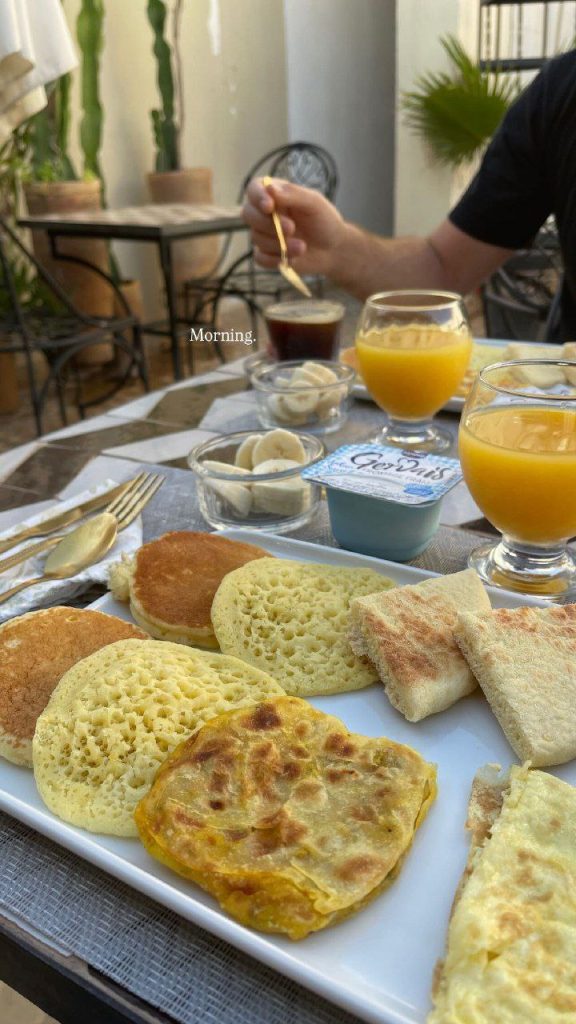
Msemen is a square flatbread stuffed with onions, spices, and herbs. It’s great on its own or with other dishes. Making Msemen involves a thin dough folded and cooked on a griddle.
Batbout: Moroccan Pita Bread
Batbout is a soft, small pita bread. It’s made from yeast dough that rises before being shaped. Batbout is perfect for sandwiches or with meals.
Harcha: Semolina Pan-Fried Bread
Harcha is a semolina bread pan-fried for a crispy outside and soft inside. It’s enjoyed with butter, honey, or jam. Semolina flour makes Harcha special.
Learning about these Moroccan breads can deepen your love for Moroccan food and culture. Each bread shows the diversity and richness of Moroccan traditions.
Essential Ingredients for Authentic Moroccan Bread
Making great Moroccan bread starts with the right ingredients. You need traditional items and the right methods. Knowing each ingredient’s role is key to a perfect loaf.
Flour Varieties: All-Purpose, Semolina, and Whole Wheat
Moroccan bread mixes different flours like all-purpose, semolina, and whole wheat. Semolina flour is a must for bread like Khobz Dyal Smida. It gives the bread its special texture and taste. All-purpose flour is versatile, and whole wheat adds a nutty flavor and denser texture.
The Role of Yeast and Leavening Agents
Yeast is vital in Moroccan bread for making it rise. You can choose active dry yeast or instant yeast. Some recipes might add baking powder for extra rise or a lighter texture.
Additional Flavorings and Seasonings
Moroccan bread is famous for its unique tastes. It gets these from olive oil, salt, and sometimes anise or nigella seeds. You can also add herbs like rosemary or thyme for a special flavor.
Kitchen Tools and Equipment You’ll Need
To bake authentic Moroccan bread, you’ll need the right tools and equipment. The equipment you choose can greatly affect your bread’s texture and taste.
Traditional vs. Modern Baking Equipment
Moroccan bread baking has a rich history. Traditional equipment is key to getting authentic flavors. But, modern tools can also make great bread with more ease.
Clay Tagines and Ferran Ovens
Clay tagines and Ferran ovens are traditional for Moroccan cooking. Clay tagines are great for slow-cooking stews and baking some bread types. Ferran ovens are made for baking bread and give a crispy crust.
If you prefer modern tools, stand mixers are perfect for kneading dough. They make the process quicker and easier, ensuring a smooth dough. Other modern options include bread machines and electric ovens with precise temperature control.
Setting Up Your Workspace for Bread Making
Before baking, setting up your workspace is key. Here are some tips:
- Clear a large surface for kneading dough
- Organize your ingredients within easy reach
- Use a baking sheet or proofing basket for shaping bread
By organizing your workspace well, you’ll focus better on making bread. This will help you get better results.
Mastering the Basic Moroccan Bread Dough
To make authentic Moroccan bread, you must first master the basic dough. This dough is the base for many types of Moroccan bread. Each type has its own special taste and look.
Step-by-Step Mixing and Kneading Techniques
Mixing and kneading are key steps in making the dough. You can choose to knead by hand or use a machine, depending on what you like and what you have.
Hand Kneading Methods
Hand kneading is a hands-on way that’s also calming. Begin by mixing your ingredients in a big bowl. Then, put the dough on a floured surface and knead for 10 minutes. This will make the dough smooth and elastic.
Machine Kneading Adaptations
For a quicker option, use a stand mixer with a dough hook. This method is quicker and easier on your body. Mix the ingredients slowly, then knead for 5-7 minutes until it’s smooth.
Proper Fermentation and Proofing Methods
After kneading, the dough needs to ferment and proof. This step is vital for the flavor and texture of your Moroccan food bread.
Temperature and Timing Considerations
Put the dough in a warm, draft-free spot. Let it rise until it’s doubled in size. The best temperature for proofing is between 75°F to 80°F (24°C to 27°C).
Visual Cues for Perfectly Proofed Dough
A dough that’s proofed right will have big bubbles on top and feel soft and springy. After it’s proofed, you can shape it into different forms for various Moroccan bread types.
How to Make Traditional Moroccan Khobz Bread
Moroccan Khobz bread is known for its crispy outside and soft inside. It’s a tasty addition to any meal. You can make it easily with this guide.
Detailed Khobz Recipe with Measurements
Ingredient List and Proportions
To make authentic Moroccan Khobz, you’ll need:
- 2 cups of all-purpose flour
- 1 teaspoon of salt
- 1 teaspoon of sugar
- 1 packet (2 1/4 teaspoons) of active dry yeast
- 1 cup of lukewarm water
Using high-quality ingredients is key for the best taste and texture.
Mixing and Preparation Steps
Start by mixing dry ingredients (flour, salt, sugar, and yeast) in a big bowl. Add lukewarm water slowly, stirring with a wooden spoon until dough forms. Knead the dough on a floured surface for about 10 minutes until it’s smooth and elastic.
Proper kneading is vital for developing the dough’s gluten. This makes Khobz have its unique texture.
Shaping and Decorating Your Khobz
Traditional Patterns and Designs
When the dough is ready, shape it into a round ball and flatten it slightly. Use your fingers to make a pattern on the surface, usually circular indentations.

This pattern not only looks good but also helps the bread bake evenly.
Baking and Finishing Techniques
Preheat your oven to 425°F (220°C). Place the shaped Khobz on a baking sheet lined with parchment paper. Bake for 20-25 minutes, or until it’s golden brown. Let it cool on a wire rack after removing from the oven.
Proper baking ensures your Khobz has a crispy crust and a soft inside, just like traditional Moroccan bread.
Crafting Perfect Moroccan Bread Semolina (Khobz Dyal Smida)
Making Moroccan bread semolina is an art. It starts with picking the right semolina and mastering the dough. This bread, known as Khobz Dyal Smida, is hearty and full of flavor.
Ingredients and Preparation Steps
To make real Moroccan bread semolina, you need the right ingredients. You also need to follow a specific method to prepare the dough.
Selecting the Right Semolina
The quality of your semolina is key. Choose fine or coarse semolina flour that’s fresh. Fine semolina makes the bread smooth, while coarse semolina gives it a rustic texture.
Mixing and Handling Semolina Dough
When mixing the dough, aim for the right moisture level. The dough should be slightly sticky but not too wet. Avoid overworking the dough to prevent a dense bread. Mix the ingredients just until they come together.
Tips for Achieving the Perfect Texture
Getting the perfect texture in Moroccan bread semolina takes careful attention. Pay close attention to both the dough’s moisture and the baking time.
Hydration Levels for Semolina Bread
The right amount of water for semolina bread is about 60% of the semolina’s weight. You might need to adjust this to get the dough just right.
Baking Times and Temperatures
Bake your semolina bread at 425°F (220°C). The baking time will vary based on the bread’s size. But usually, a standard loaf takes 25-35 minutes.
Exploring Regional Varieties of Moroccan Breads
As you explore Moroccan bread, you’ll find many regional varieties. Each region has its own bread, showing local ingredients and traditions. This reflects the cultural influences of each area.
Northern Moroccan Bread Specialties
Northern Morocco’s bread is special, thanks to its close ties to Spain and the Mediterranean. Khobz Mghamra, baked in a clay oven, is a favorite. It’s often enjoyed with olive oil and spices.
Southern and Berber Bread Traditions
In Southern Morocco, the Berber communities have their own bread-making ways. Aghrum, a dense bread, is made from barley or wheat. It’s cooked on a griddle.
Festive and Ceremonial Breads
Moroccan bread is key in festive and ceremonial times. Special breads are made for weddings and holidays. They’re decorated with designs, showing hospitality and generosity.
Baking Techniques for Moroccan Food Bread
There are many ways to bake Moroccan bread, from clay ovens to modern home ovens. Each method can bring out unique flavors and textures.
Traditional Clay Oven (Ferran) Method
The traditional clay oven, called a Ferran, is used for baking Moroccan bread Khobz. It gives a special flavor and crust. To get this at home, use a clay oven or a hot, heavy stone.
Modern Home Oven Adaptations
If you don’t have a clay oven, modern home ovens work well too. A baking steel or stone can help make a crispy crust like the traditional way.
Stovetop Cooking Methods for Batbout and Msemen
Batbout and Msemen are Moroccan breads cooked on the stovetop. Choosing the right pan and controlling the heat are key for the perfect texture and taste.
Proper Pan Selection and Heat Control
Use a heavy-bottomed pan for even heat. Medium heat is best for cooking these breads.
Flipping and Cooking Techniques
Flipping the bread at the right time is important for even cooking. Cook until both sides are golden, adjusting the heat to avoid burning.
Learning these baking techniques lets you make a variety of tasty Moroccan food bread at home. You can make traditional Khobz and stovetop-cooked Batbout and Msemen.
Troubleshooting Common Moroccan Bread Problems
Starting your Moroccan bread baking journey can bring up some common problems. But, these issues can be fixed with the right techniques.
Fixing Dense or Undercooked Bread
Dense or undercooked bread can be a letdown. It’s a big disappointment after all the effort you put into it. Let’s first figure out what’s going wrong with your dough.
Diagnosing Dough Issues
First, check if your dough is too wet or too dry. If it’s too wet, it won’t hold its shape right. If it’s too dry, it might make your bread dense. Adjusting the water can help.
Adjusting Recipes for Better Results
Think about changing your recipe for better results. Mixing all-purpose and semolina flour can improve texture. Also, make sure you’re using the right yeast for your Moroccan khobz recipe.
Solutions for Cracking and Improper Rising
Cracking and improper rising are common problems. Let’s see how to solve these issues.
Humidity and Environmental Factors
Humidity and temperature greatly affect your bread. High humidity can cause cracks, while low temperatures slow rising. Keep an eye on your environment while baking.
Scoring and Shaping Corrections
How you score and shape your bread affects its rise and look. Practice different scoring and shaping methods to find what works for your types of Moroccan bread.
By fixing these common problems, you’ll be on your way to baking amazing Moroccan bread. Happy baking!
Storing and Preserving Your Moroccan Breads
Keeping your Moroccan bread fresh is key. Whether it’s Khobz or Msemen, the right storage keeps it tasty longer. Here’s how to store your bread right.
Short-term Storage Methods
For a short time, keep your bread at room temperature. Store it in a cool, dry spot, away from sunlight. Wrap it in a cloth or paper bag to keep it fresh. Here are some tips:
- Keep the bread away from moisture.
- Use a bread box or a paper bag to store.
- Avoid storing bread in the refrigerator as it can cause it to dry out.
Freezing and Reheating Techniques
Freezing is great for longer storage. Wrap your bread tightly in plastic or foil, then in a freezer-safe bag. To eat, thaw at room temperature or reheat in the oven. Here’s how:
- Wrap the bread tightly to prevent freezer burn.
- Label the bag with the date.
- Reheat in the oven at 350°F (175°C) for 5-10 minutes.
Conclusion
You now know how to bake delicious Moroccan bread, a key part of Moroccan cuisine. By learning to make different types, like Khobz and semolina bread, you’ll improve your cooking skills. You’ll also get to enjoy the rich culture of Morocco.
Moroccan bread, such as Khobz and semolina, is more than just food. It’s a sign of welcome and community. With the tips from this article, you can make real Moroccan bread. It will take you back to the lively streets of Marrakech.
As you keep baking and trying new recipes, you’ll love sharing fresh bread with loved ones. Whether it’s traditional Khobz or new twists, baking Moroccan bread will become a special part of your cooking journey.
FAQ
What is the traditional Moroccan bread called?
The traditional Moroccan bread is called Khobz. It’s a round bread that is a staple in Moroccan cuisine.
What type of flour is used to make Moroccan bread?
Moroccan bread can be made with different flours. These include all-purpose flour, semolina flour, and whole wheat flour.
How do you achieve the perfect texture in semolina bread?
To get the perfect texture in semolina bread, balance the hydration levels. Also, adjust baking times and temperatures as needed.
Can I make Moroccan bread without a traditional clay oven?
Yes, you can make Moroccan bread without a traditional clay oven. You can use modern home oven adaptations or stovetop cooking methods as alternatives.
What are some common problems encountered when baking Moroccan bread?
Common problems include dense or undercooked bread, cracking, and improper rising. There are troubleshooting tips to help solve these issues.
How do I store Moroccan bread to maintain its freshness?
You can store Moroccan bread using short-term storage methods or freeze it for longer preservation. Reheating techniques can help restore its freshness.
What is the role of yeast in Moroccan bread making?
Yeast is key in leavening Moroccan bread. It contributes to its texture and flavor.
Can I make different types of Moroccan bread, such as Msemen and Batbout?
Yes, you can make various types of Moroccan bread. This includes Msemen (Moroccan square flatbread) and Batbout (Moroccan pita bread). You can use different ingredients and cooking techniques.